
Central African roots
Traditional Gabon food uses cassava, plantain, forest produce, fish, sauces and stews.
Gabon food combines Central African flavors, Atlantic seafood, forest ingredients, French influence and everyday staples such as cassava, plantain, rice, fish, chicken and rich sauces. Travellers can discover hearty stews, grilled fish, brochettes, tropical fruit, market dishes and regional specialties.
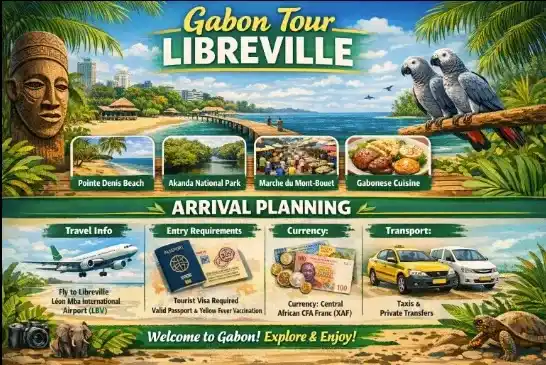
Food is part of the travel experience in Gabon, whether you are eating in Libreville, visiting coastal towns, exploring national parks or sharing a meal with a host family. Before travelling, prepare your passport, visa or eVisa documents, yellow fever certificate and entry documents so the culinary journey begins smoothly.
Gabonese cuisine reflects the country's forests, rivers, Atlantic coastline, urban markets and regional cultures. Meals often combine a staple such as cassava, plantain or rice with fish, chicken, meat, vegetables and flavorful sauces. Palm nut sauce, peanut sauce, smoked fish and grilled dishes are especially important in everyday cooking.
Traditional Gabon food uses cassava, plantain, forest produce, fish, sauces and stews.
Atlantic fish and seafood are common, especially around Libreville and Port-Gentil.
Urban dining may include bakeries, pastries, cafés, sauces and French-style restaurant service.
Markets are important for fruit, vegetables, fish, spices, cassava, plantain and prepared foods.
Traveller insight: Gabon food is best understood by trying both restaurant dishes and simple everyday foods, including grilled fish, cassava, plantain, rice with sauce and tropical fruit.
These dishes and food categories introduce visitors to Gabon's local flavors. Availability can vary by city, season, restaurant and region.
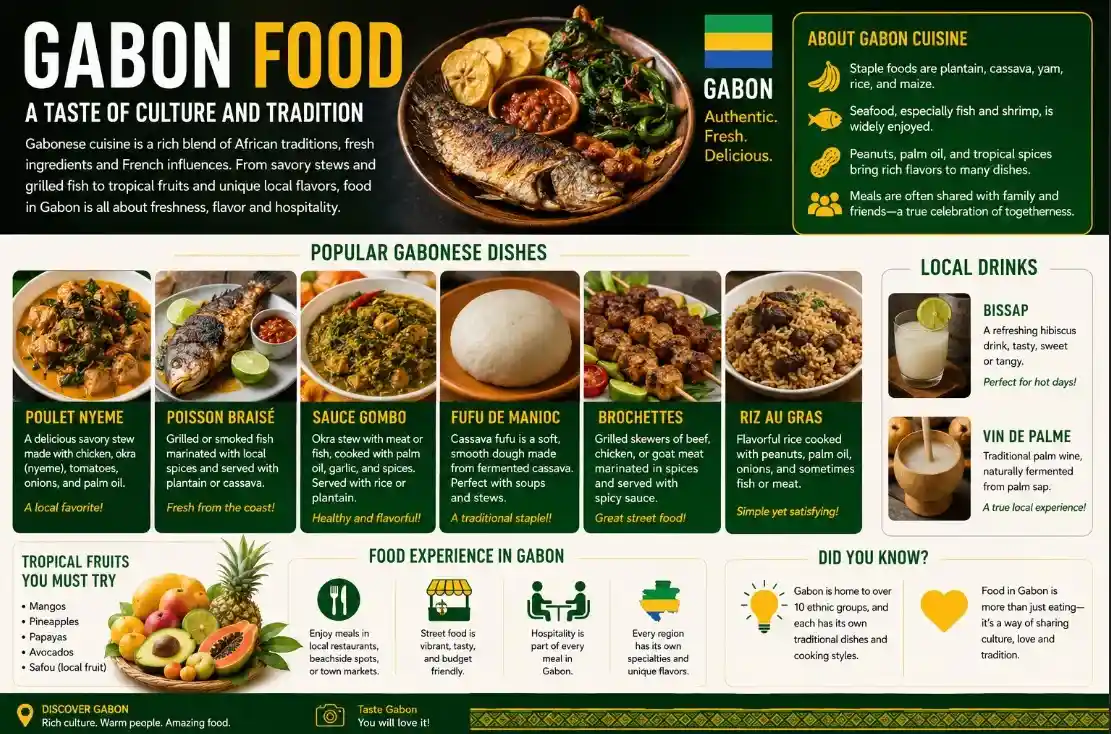
Chicken cooked in a rich palm nut sauce, often served with cassava, plantain or rice.

Fresh fish grilled and served with plantain, cassava, rice, vegetables or spicy sauce.
Skewered grilled meat or fish, popular as casual food in towns, markets and roadside settings.
| Dish or food | Main ingredients | What travellers should know |
|---|---|---|
| Poulet Nyembwe | Chicken, palm nut sauce, seasoning | One of Gabon's signature dishes; rich, savory and often served with a starch. |
| Nyembwe sauce | Palm nuts or palm nut extract, spices, meat or fish | A central sauce in Gabonese cooking, used with chicken, fish or other proteins. |
| Grilled fish | Fresh fish, spices, chili, lemon or local seasoning | Common near the coast, rivers and urban restaurants. |
| Smoked fish stew | Smoked fish, tomatoes, onions, greens, spices | Smoky and savory; often eaten with rice, cassava or plantain. |
| Bâton de manioc | Cassava | A common cassava-based staple, often served with sauces and stews. |
| Plantain | Ripe or green plantain | May be fried, boiled or grilled and served with fish, chicken or sauce. |
| Atanga | A local fruit also known as African pear | Often boiled or warmed and eaten with salt, bread or as a snack. |
| Peanut sauce dishes | Ground peanuts, vegetables, fish, chicken or meat | Hearty and rich; ask about ingredients if vegetarian or allergic. |
Gabonese food is built around local staples, coastal and river fish, forest products, tropical fruit and sauces. These ingredients appear in home cooking, markets, restaurants and roadside meals.
A major staple served as bâton de manioc, paste, flour, boiled pieces or side dish.
Served fried, boiled or grilled, often with fish, chicken, meat or sauces.
Used for nyembwe sauce, one of the defining flavors of Gabonese cuisine.
Fresh, smoked or dried fish appears in stews, grilled meals and sauces.
Ground peanuts create rich sauces used with vegetables, meat, fish or chicken.
A common side dish in cities and restaurants, usually paired with sauce or stew.
Mango, pineapple, banana, papaya, coconut and local fruits are found in markets.
Heat may be added to sauces or served on the side for diners who prefer spice.
Gabon's Atlantic coastline and river systems make seafood an important part of the food culture. In coastal areas and cities, visitors may find grilled fish, prawns, smoked fish, fish stews and simple fish meals served with plantain, rice, cassava or vegetables.
The capital offers restaurants, hotels, markets and coastal food with fish and seafood options.
As a coastal city, Port-Gentil is a useful place to try fish, seafood and urban dining.
Fresh fish and simple grilled meals may be available depending on season and route.
Markets and roadside food spots can be an excellent way to experience Gabonese daily life. Travellers may encounter grilled meats, brochettes, fried plantain, fruit, bread, snacks, fish, cassava products and simple meals served with sauce.
Food experiences vary by location. Urban travellers may find restaurants, cafés and international food, while coastal, river and forest routes offer more local dishes, fish, seasonal produce and simple roadside meals.
Restaurants, hotels, bakeries, markets and coastal dining make Libreville a good introduction to Gabon food.
Remote routes may have simpler meals, lodge dining, fresh fish, rice, cassava, plantain and seasonal produce.
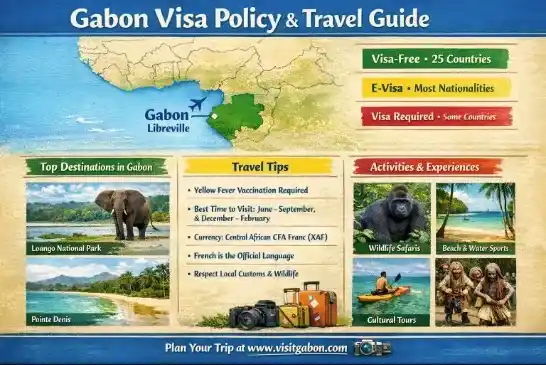
Prepare documents, travel insurance, cash, food safety habits and dietary notes before travelling.
Travellers with dietary restrictions should plan ahead. Vegetarian dishes can be possible, but sauces may contain fish, smoked fish, meat stock, shrimp, palm oil or peanut. Clear communication is important.
Look for rice, plantain, cassava, beans, vegetables, fruit and some peanut or vegetable sauces.
Peanuts, fish, shellfish and palm products may be present in sauces or stews.
Write dietary restrictions in French and show them when ordering or shopping.
Dietary tip: If you avoid fish, meat or peanuts, ask specifically about the sauce, not only the main ingredient.
Food is social in Gabon. Meals may be shared with family, hosts, colleagues or guides, and politeness matters. Visitors should be respectful, ask before photographing food vendors or private meals, and follow local guidance.
Polite greetings are important before asking questions, ordering or entering local settings.
Request permission before photographing food sellers, markets, kitchens or private meals.
If invited to eat, follow host cues and show appreciation for the meal.
French is widely used; simple food phrases help in restaurants and markets.
Food safety helps protect your trip. Travellers should choose freshly cooked food, stay hydrated, manage water risk and carry basic travel health supplies.
Health reminder: Travellers entering Gabon should carry proof of yellow fever vaccination and should consult a qualified healthcare provider before travel.
Travelling to Gabon for cuisine, tourism, markets, culture or private visits still requires proper entry documents. Most foreign travellers need a Gabon visa or eVisa unless visa-free or specially exempt.
Carry a passport valid for at least six months and matching all visa details.
Eligible travellers may apply online before departure if the eVisa route supports their trip.
Travellers entering Gabon should carry an original yellow fever vaccination certificate.
Prepare hotel booking, lodge confirmation or host address.
Carry return or onward travel proof for airline and border checks.
Carry evidence that you can support yourself during the stay.
Food tourism tip: Add restaurants, markets, coastal towns and culinary experiences to your itinerary, but keep the trip purpose consistent with your visa category.
A food-focused trip can combine city restaurants, markets, coastal seafood, nature lodges and cultural visits. Planning ahead helps with transport, dietary needs, cash, health and documentation.
Use the capital for restaurants, markets, bakeries, seafood and introductory Gabonese dishes.
Look for Poulet Nyembwe, grilled fish, cassava, plantain, brochettes and market fruit.
Include coastal areas or river routes for seafood and fish-based meals.
Use markets for fruit, snacks, cassava products, spices and local food culture.
Choose fresh, hot food and safe water, especially on road or remote routes.
Markets, small restaurants and roadside vendors may not accept cards.
Ask before photos and show appreciation when sharing meals with hosts.
Carry passport, visa, yellow fever proof, accommodation and return ticket while travelling.
Searches such as Gabon food, Gabon cuisine, Gabon traditional dishes, Gabonese food, food in Gabon, Gabon dishes, Gabon travel food, Libreville restaurants, Gabon street food and apply for Gabon visa online all connect food discovery with travel preparation. Visitors should enjoy the cuisine while also preparing the correct passport, visa, health and entry documents.
Try Poulet Nyembwe, grilled fish, cassava, plantain, rice and rich sauces.
Look for palm nut sauce, peanuts, smoked fish, tropical fruit and market produce.
Choose fresh, hot food and use safe water practices while travelling.
Prepare visa or eVisa, passport, yellow fever proof and arrival documents before departure.
Answers to common questions about Gabonese cuisine, traditional dishes, seafood, street food, vegetarian options, food safety and travel documents.
Gabon food is shaped by Central African ingredients, Atlantic seafood, forest produce and French influence. Common foods include fish, chicken, cassava, plantain, rice, palm nut sauce, peanut sauce, stews and tropical fruits.
Poulet Nyembwe is one of the best-known Gabonese dishes. It is chicken cooked in a rich palm nut sauce and is often served with cassava, plantain or rice.
Travellers can try Poulet Nyembwe, grilled fish, brochettes, smoked fish stew, cassava, plantain, peanut sauce dishes, atanga and tropical fruits.
Yes. Gabon's Atlantic coastline and rivers make fish and seafood common, especially in Libreville, Port-Gentil and coastal areas.
Some Gabonese dishes may be mildly spicy or served with chili on the side. Travellers who prefer less heat should ask before ordering.
Vegetarians can often find rice, plantain, cassava, vegetables, beans, fruit and some peanut or vegetable-based dishes, but should ask about fish, meat stock or shrimp paste in sauces.
Street food can be enjoyable, but travellers should choose busy stalls where food is cooked fresh and served hot. Avoid food that appears poorly stored or exposed for long periods.
Travellers commonly use bottled or treated water and may try local juices or soft drinks. Use caution with ice and unsealed drinks if unsure of water safety.
Most foreign travellers need a Gabon visa or eVisa unless visa-free or exempt. Eligible travellers may apply for a Gabon eVisa before departure if their route and purpose are supported.
Travellers entering Gabon should carry proof of yellow fever vaccination, regardless of whether the trip is for food, tourism, business or private visit.
Libreville is a good starting point because it has restaurants, markets, hotels, bakeries and coastal seafood. Coastal towns, lodges and local markets can also offer memorable food experiences.
For remote routes, carry bottled or treated water, snacks, fruit, energy bars, basic supplies and any special dietary foods you require, especially if travelling to parks or rural areas.
Prepare your passport, visa or eVisa approval, yellow fever certificate, accommodation proof, return/onward ticket and funds proof before travelling to Gabon for food, culture and tourism.
Disclaimer: www.gabon-visa.com is not affiliated with the Government of Gabon, DGDI, any Gabonese embassy or consulate, restaurant, hotel, tour operator, airline, health authority or food vendor. This page provides general information about Gabon food, traditional dishes, dining culture, food safety and travel preparation. Food availability, restaurant standards, market conditions, prices, health requirements, visa rules, entry procedures and travel conditions may change. Travellers should verify visa and entry requirements before departure and consult qualified medical advice for food allergies, dietary needs or travel health concerns. Service fees cover professional visa assistance and are separate from government, embassy, airport, airline, restaurant, clinic or immigration fees. Visa support does not guarantee approval or entry; final decisions are made by competent authorities and border officials.