
Official Gabon eVisa portal
The official portal explains Gabon eVisa application, passport and photo requirements, processing guidance, fees and the air entry route through Léon-Mba International Airport.
Open official eVisa portal
A Gabon Visa Extension may be relevant if a traveller needs to remain in Gabon beyond the validity or permitted stay shown on the visa, eVisa authorization or entry stamp. Extension decisions are made by the competent Gabonese immigration authorities, and travellers should act before their current stay expires.
Public Gabon eVisa guidance focuses mainly on pre-arrival electronic visa applications and notes that travellers wishing to settle in Gabon should consult DGDI for the appropriate terms and conditions. A short-stay eVisa is not a work, study, residence or settlement permit.
Extension procedures are not always published in the same detail as pre-arrival eVisa rules. Travellers should verify current instructions with DGDI, the relevant immigration office, embassy, employer sponsor or official support channel before relying on any extension plan.
The official portal explains Gabon eVisa application, passport and photo requirements, processing guidance, fees and the air entry route through Léon-Mba International Airport.
Open official eVisa portal
e-DGDI references Gabon immigration documentation services, application status checks and complaint channels for DGDI-related administrative matters.
Open e-DGDI services
Airport guidance helps travellers understand arrival formalities, health checks, border police procedures, baggage collection and customs clearance.
A Gabon visa extension is a request to remain in Gabon beyond the period currently authorized by a visa, eVisa, entry stamp or immigration document. The request should be made before expiry and must follow the instructions of the competent Gabonese immigration authority.
The safest time to seek extension guidance is before the current visa, eVisa or permitted stay expires.
A traveller cannot extend a stay simply by remaining in Gabon. Approval or official instructions are required.
Staying after expiry may cause fines, delays, penalties, refusal of future visas or other immigration problems.
Important: Visa validity, permitted stay and entry count are separate. Always check the visa conditions and the entry stamp. If there is any doubt, ask DGDI or the relevant immigration office before the deadline.
Travellers may need an extension when unexpected circumstances require them to remain in Gabon longer than originally planned. The reason should be genuine, documented and compatible with immigration rules.
Illness, flight disruption, emergency family matters or other documented circumstances may require guidance.
Meetings, project discussions, conferences or negotiations may take longer than planned.
Cancelled flights, route changes or onward-destination issues may affect departure plans.
Work, study or residence plans require the proper long-stay route rather than an informal overstay.
Extension eligibility depends on the visa type, current stay status, passport validity, reason for staying, documents, immigration history and current Gabonese rules. A request can be accepted, refused, limited, or redirected to another immigration procedure.
Tourist, business, family visit or event visitors should verify whether extension is available before expiry.
Transit authorization is usually limited to onward travel. Longer stays may require another visa category.
Paid work, residence, study or settlement normally requires the correct long-stay or residence authorization.
Limitation: A visa extension is not guaranteed and may not be available for every nationality, visa type, entry route or travel purpose. Always follow official instructions.
Gabon eVisa guidance mainly covers the pre-arrival electronic application route. Official eVisa information states that eVisas are valid for travellers entering by air through Léon-Mba International Airport in Libreville and that travellers wishing to settle in Gabon should consult DGDI for the relevant terms and conditions.
Review validity, entry count, purpose and any date restrictions shown on the issued eVisa or entry stamp.
If you need to stay longer, verify local extension or status options with the competent immigration authority.
An approved eVisa does not automatically renew or extend itself after the permitted stay expires.
Exact document requirements are set by the competent authority. The checklist below covers common documents travellers should prepare before requesting guidance or submitting an extension request.
Document tip: Bring originals and copies where possible. Keep scanned copies available offline in case an office requests digital submission or email follow-up.
The practical process depends on your current status and the office handling the request. Use this as a preparation checklist, not as a substitute for official instructions.
Review your visa, eVisa and entry stamp to identify the actual deadline.
Verify whether DGDI, a local immigration office, embassy, employer sponsor or another authority handles your case.
Write a clear reason for staying longer and collect supporting evidence.
Prepare passport, visa, entry stamp, accommodation, funds proof, travel plan and supporting documents.
Follow the official submission channel, appointment, office visit or online instruction provided.
Keep receipts, appointment confirmation, submission proof and all official correspondence.
Do not assume approval. Follow any instruction to provide extra documents or leave before the deadline.
If approved, follow the new stay conditions. If refused, leave Gabon or use the appropriate official route.
Travellers should seek official guidance as early as possible and before the authorized stay expires. Late requests may leave too little time for document review, appointments, fee payment or official decision-making.
Begin checking extension options as soon as you know your stay may exceed the authorized period.
Waiting until the final day can create problems if offices are closed or extra documents are requested.
After expiry, you may already be in overstay status and could face penalties or departure delays.
Extension fees and processing times are set by the competent authority and may vary by visa type, duration, office, nationality, status and reason. A public, universal extension fee schedule should not be assumed.
| Item | What to know | Recommended action |
|---|---|---|
| Extension fee | May vary or may not be published in the same way as pre-arrival eVisa fees. | Ask DGDI or the relevant office for the current official amount and payment method. |
| Processing time | May depend on office workload, documents, visa type and whether extra checks are required. | Apply early and keep proof of submission or appointment. |
| Short-stay eVisa fee | Official eVisa guidance commonly cites 70 EUR or 45,000 XAF + 15 EUR file fee for 1 to 3 month single-entry eVisas. | Do not confuse eVisa application fees with in-country extension fees. |
| Long-stay or residence route | Work, study, residence or settlement may involve different fees, sponsors and immigration documents. | Consult DGDI, embassy, employer or sponsor before short-stay status expires. |
Fee reminder: Avoid paying unofficial intermediaries or unverified contacts. Use official instructions and keep receipts for any approved payment.
Overstaying means remaining in Gabon after the authorized visa or permitted stay has expired. It can create immediate departure problems and future immigration consequences.
A visa extension is not the same as changing to residence, work or study status. Travellers who intend to settle, work, study, invest, retire or live in Gabon should use the correct long-stay or residence procedure.
Paid employment usually requires employer support and the correct work authorization before starting work.
Students should verify admission, sponsorship and immigration requirements before the short-stay period ends.
Travellers wishing to settle should consult DGDI for residence and long-stay conditions rather than rely on a tourist extension.
Do not misuse visa type: A tourist, business or transit visa should not be used for residence, paid employment or long-term stay unless the competent authority has issued the appropriate authorization.
Many travellers confuse visa validity with permitted stay. The visa may have one date range, while the entry stamp or officer’s instruction may control the actual stay period. Check both immediately after arrival.
The period during which the visa can be used or remains valid, subject to its conditions.
The amount of time you are allowed to remain after entry, which may differ from the visa validity period.
Single-entry visas are normally used once; multiple-entry visas allow repeated entries only within conditions.
Practical step: Photograph your entry stamp and visa page after arrival and save a calendar reminder several days before the authorized stay expires.
Many stay-compliance problems can be avoided by checking the date early, using official channels and not assuming that extension is automatic.
The best visa-extension strategy is early planning. Keep your documents organized, confirm the correct authority and avoid last-minute decisions.
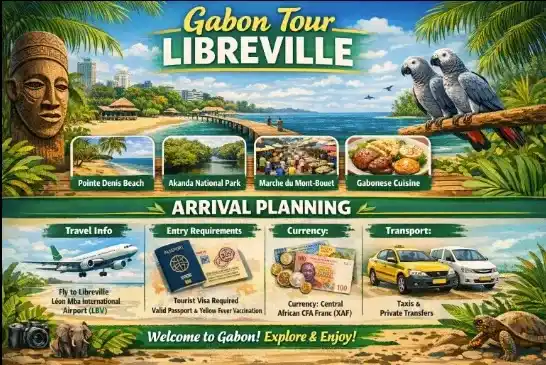
DGDI and relevant immigration offices are key sources for in-country stay and extension guidance.

Tourists should keep accommodation, funds proof, return ticket and extension reason ready.
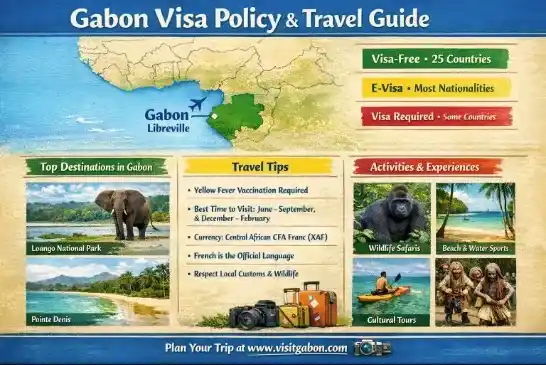
Check visa type, validity, entry count, permitted stay and long-stay alternatives before the deadline.
Searches such as Gabon visa extension, extend Gabon visa, Gabon eVisa extension, Gabon visa validity, Gabon overstay, Gabon immigration, DGDI Gabon, Gabon visa requirements and apply for Gabon visa online all relate to one important issue: staying legally within the dates and purpose authorized by Gabonese immigration authorities.
Extension requests should be made before expiry and through the competent official channel.
The eVisa approval and entry stamp should be checked carefully after arrival.
Overstay can lead to fines, delays and future visa issues, so travellers should act early.
Work, study, residence and settlement require the correct immigration authorization.
Answers to common questions about extending a Gabon visa, eVisa stay limits, DGDI, overstay risks, documents, timing, long-stay alternatives and application support.
A Gabon visa extension may be possible in some cases, but extension eligibility, procedure, fee and duration are determined by the competent Gabonese immigration authority. Travellers should contact DGDI or the relevant official channel before the visa or permitted stay expires.
Public eVisa guidance focuses mainly on pre-arrival eVisa application and entry. Travellers already in Gabon should verify extension or stay-compliance options with DGDI or the relevant immigration office before their authorized stay expires.
You should request guidance before your visa or entry stamp expires. Waiting until after expiry may create overstay problems, fines, departure delays or future visa issues.
Gabon immigration matters are handled by the competent Gabonese authorities, including DGDI. Embassy or employer-supported routes may apply for certain long-stay, work, study or residence cases.
Common documents may include passport, current visa or eVisa approval, entry stamp, accommodation proof, funds proof, return or onward ticket, reason for extension, purpose-specific documents and any forms or receipts requested by the authority.
A tourist or short-stay visa does not normally authorize paid employment. Work in Gabon requires the correct work authorization, employer support and immigration status as required by Gabonese authorities.
Overstaying may lead to fines, departure delays, immigration penalties, problems with future visa applications, refusal of entry or other measures. Travellers should avoid overstay and seek official guidance before expiry.
No. A visa extension is never guaranteed. Final decisions are made by the competent Gabonese immigration authority based on current rules, documents and the traveller’s circumstances.
Travellers who wish to settle, work, study or reside in Gabon should consult DGDI, the relevant embassy, employer or sponsor about the appropriate long-stay or residence procedure instead of relying on a short-stay extension.
Check the visa approval, eVisa authorization, visa sticker and entry stamp. If the information is unclear, ask DGDI or the relevant immigration office for clarification before the earliest possible expiry date.
This depends on your visa type and entry count. A single-entry visa is normally used after one entry. Re-entry may require a new visa or a multiple-entry visa if eligible.
Do not assume a new eVisa can regularize an in-country stay. If already in Gabon, ask DGDI or the relevant immigration office how to handle your status before expiry.
Extension fees may vary and may not be published in the same way as pre-arrival eVisa fees. Verify the current official fee and payment method with the authority handling the request.
Yes. Gabon visa extension rules, fees, processing times, required documents, offices and eligibility can change quickly. Travellers should verify current information with official immigration, embassy or airline sources before making travel decisions.
If you are planning a future visit to Gabon, prepare your passport, photo, itinerary, accommodation proof, return/onward ticket, funds proof, yellow fever certificate and purpose-specific documents before starting a new Gabon visa application.
Disclaimer: www.gabon-visa.com is not affiliated with the Government of Gabon, DGDI, Léon-Mba International Airport, any embassy or consulate. Travellers may verify official Gabon visa extension requirements and submit applications or requests directly through the competent Gabonese authority, including DGDI, official eVisa channels, local immigration offices or the relevant embassy. Visa extension rules, eligibility, fees, payment methods, processing times, required documents, office procedures, validity, entry points, health requirements and overstay penalties may change. Service fees cover professional assistance and are separate from government, embassy, airport or immigration fees. Visa support does not guarantee approval; final decisions are made by the competent Gabonese authorities.